Until now, the direct treatment of plant bacterioses was limited to the application of antibacterial compounds or resistance inducers. This was about to change due to the discovery of bacteriophages.
Indeed, phages look very promising as therapy agents: cheap, self-amplifying, self-eliminating, and safe for the host organism. However, phage therapy of plant diseases remains a "direction with high potential", which so far, has very few successful implication cases (Korniienko et al., 2022a).
We study interactions of bacteriophages of pathogenic bacteria with their hosts taking into account plant impact on the whole system. We are also keen on solving the challenges associated with the evaluation of phage biological activity, under both laboratory and environmental conditions.
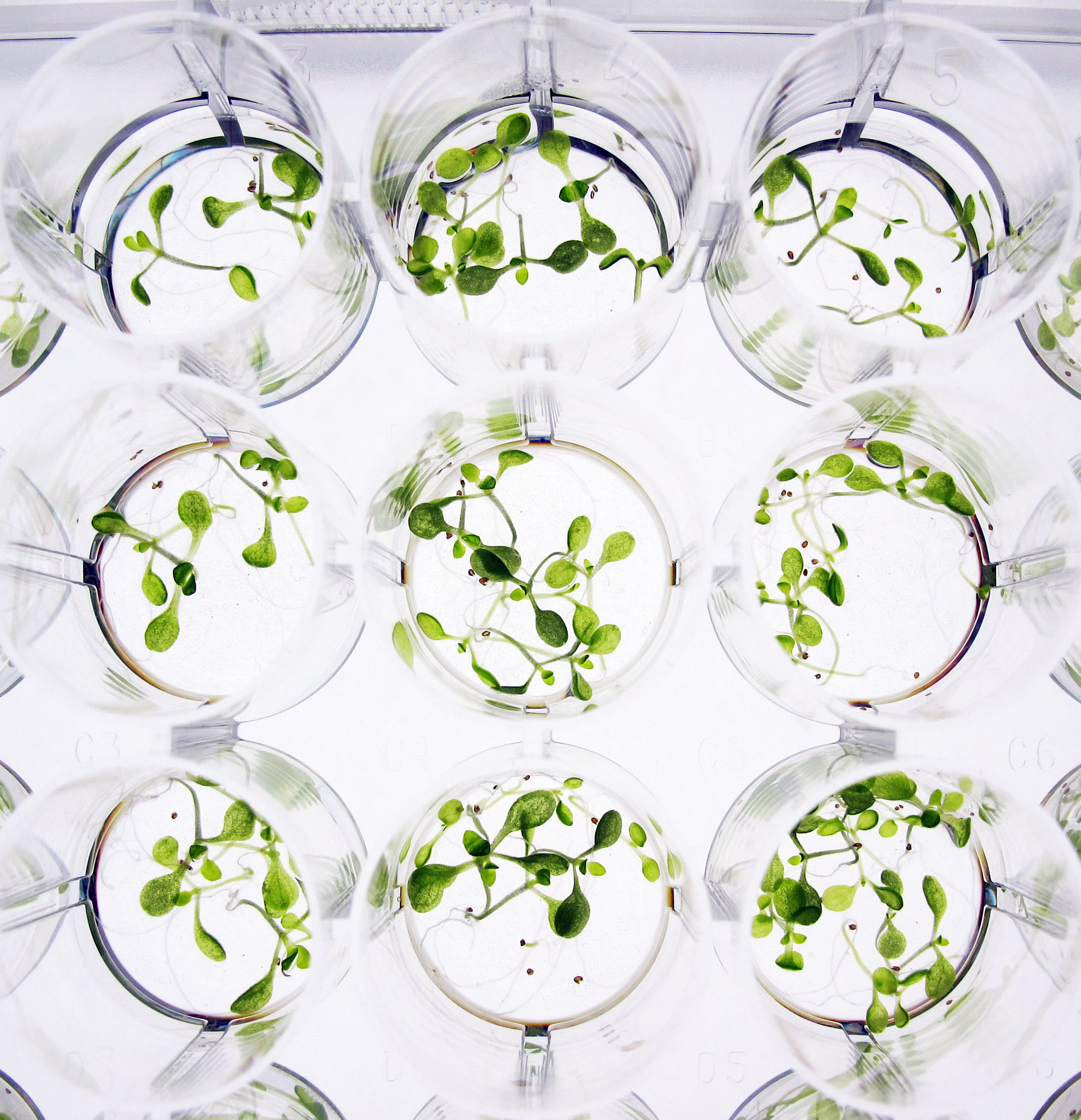
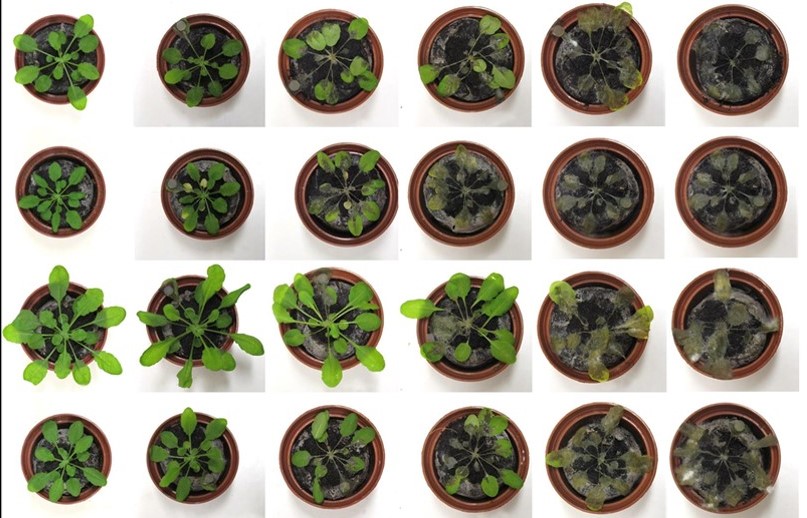
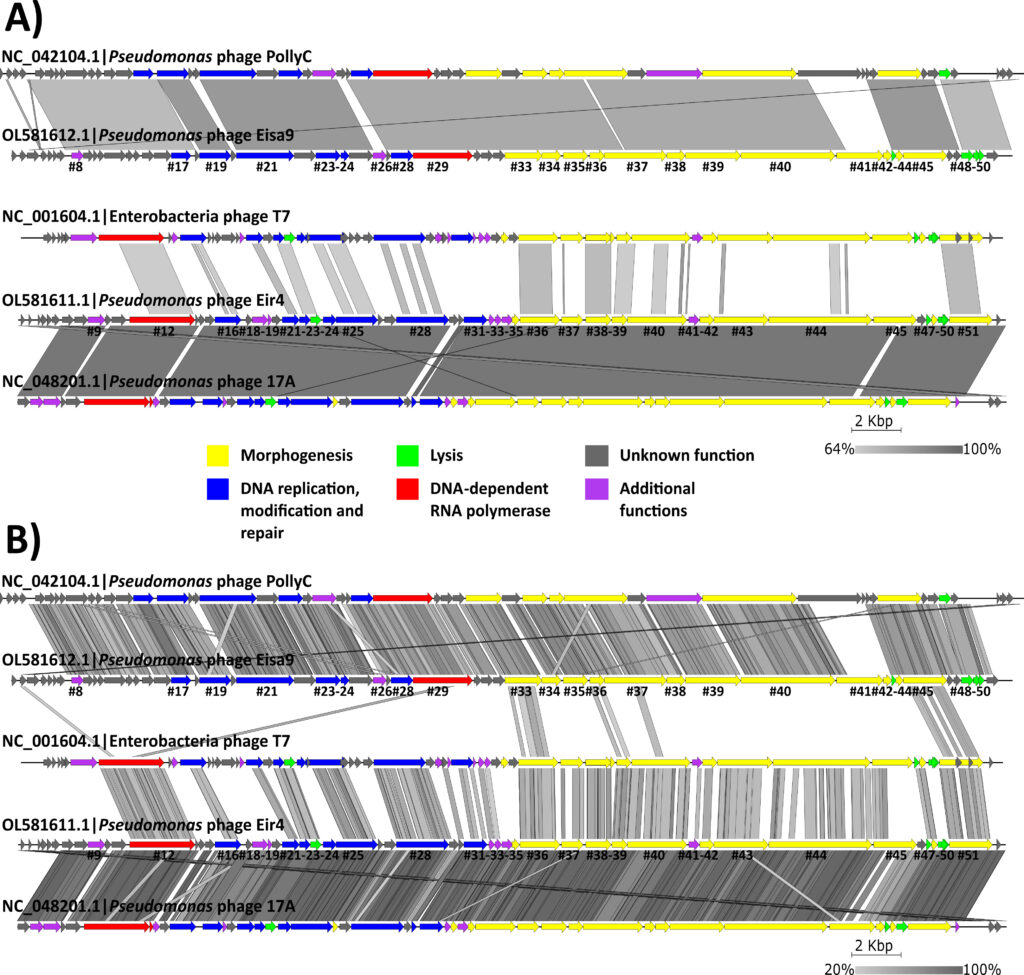
P. syringae pv. tomato (Pst) is one of the best-studied bacterial phytopathogens and a popular model organism. We have isolated two novel phages, named Eir4 and Eisa9 and characterized using traditional microbiological methods and whole-genome sequencing followed by various bioinformatics approaches. Both of the isolated phages have shown host specificity to several bacteria of Pseudomonas and Xanthomonas genera. Combining TEM virion morphology inspection and comparative genomics analyses, both of the phages were classified as members of the Autographiviridae family. Eir4, but not Eisa9 phage application significantly decreased the propagation of Pst in the leaf tissues of Arabidopsis thaliana plants (Korniienko et al., 2022b).
We now study Eir4 and Eisa9 phages as potential biocontrol agents, but also as model organism for the research of mechanisms of phage-host interactions in different plant systems.
Virion particles of Eir4 and Eisa9 phages, TEM
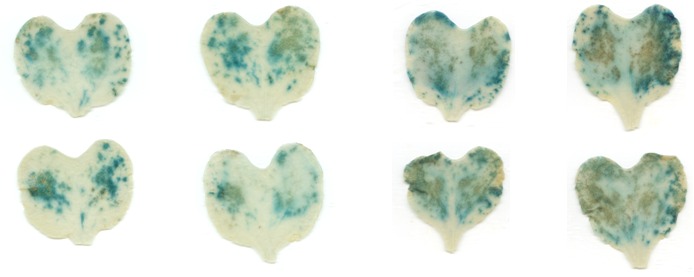
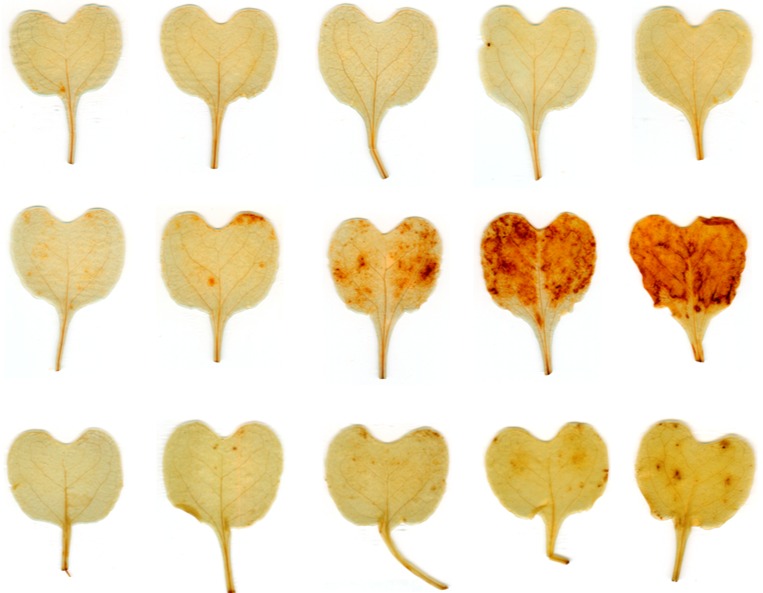
Antibacterial activity of Eir4 in Arabidopsis–Pseudomonas pathosystem
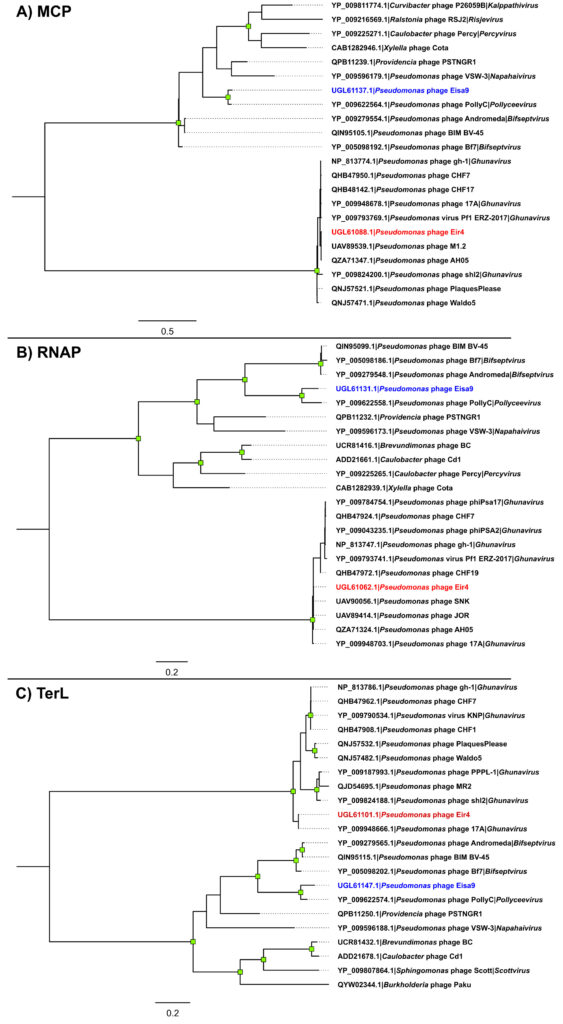
Maximum-likelihood tree of the selected close relatives of Pseudomonas phages Eir4 and Eisa9 based on the aa sequence of the major capsid protein (MCP)
Pairwise genome nucleotide sequence comparison of Eir4 and Eisa9 to their respective closest known relatives, Pseudomonas phage PollyC and exemplar Autographiviridae phage T7